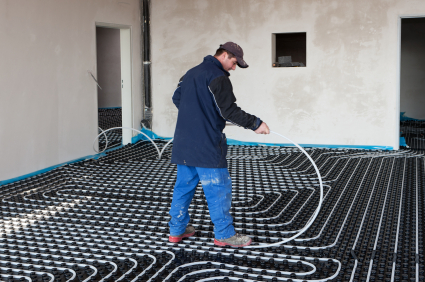
Radiant floor heating is a modern, highly comfortable way to heat garages, barns, and homes by delivering warmth from the ground up. Instead of blowing heated air through ducts, radiant systems circulate warm water through a network of durable tubing installed beneath the floor surface. The heat rises evenly throughout the space, creating consistent, draft-free comfort.
Most radiant floor systems use a high-efficiency boiler to heat the water that flows through the tubing. Because heat is distributed uniformly across the entire floor area, radiant heating can maintain comfort at lower thermostat settings compared to conventional forced-air systems — even in large or open structures.
Advantages of Radiant Floor Heating
Radiant floor systems offer several important benefits for residential and agricultural properties:
- Even, consistent warmth across the entire space
- Quiet operation — no fans, blowers, or duct noise
- Improved indoor air quality since dust, dirt, and allergens are not circulated
- Energy efficiency, particularly in large or high-ceiling buildings
- No visible vents or radiators, preserving usable space
- Comfortably warm floors, ideal for concrete slabs
- Reliable performance in cold climates
- Compatible with propane, natural gas, heating oil, or electric boilers
Radiant heating is especially effective in buildings with concrete floors, where the slab itself acts as thermal mass, storing heat and delivering steady, long-lasting comfort.
Ideal Applications
Radiant floor heating is commonly installed in:
- Residential homes and additions
- Attached and detached garages
- Barns and agricultural buildings
- Workshops and equipment storage areas
- Finished basements
- New construction projects
- Major renovations
For garages and barns, radiant floor systems eliminate cold drafts and help maintain stable temperatures for vehicles, tools, equipment, and livestock areas throughout the winter.
Efficiency and Comfort in Cold Climates
Radiant floor heating performs exceptionally well in regions with harsh winters, such as Northeastern Pennsylvania and the Southern Tier of New York. Because heat rises from the floor and warms people and objects directly, the system maintains comfort even during prolonged cold periods without the temperature swings common with forced-air systems.
Warm floors can also help reduce condensation and moisture issues frequently found in garages, barns, and agricultural structures.
Professional Design and Installation
Proper system design is critical to achieving the efficiency and durability radiant floor heating is known for. Factors such as insulation, slab construction, heat-load requirements, zoning, and control systems must be carefully evaluated.
Our technicians install hydronic radiant floor systems using proven methods and manufacturer guidelines to ensure safe operation, long-term reliability, and optimal performance in both residential and agricultural settings.
Clean, Low-Maintenance Operation
Without ductwork or circulating air, radiant floor systems typically require less routine maintenance than conventional heating systems. When paired with a properly maintained boiler and controls, they can provide dependable comfort for many years.
We can help determine whether radiant floor heating is appropriate for your garage, barn, or home whether you are building new, renovating, or upgrading an existing heating system.
Learn More About Radiant Floor Heating
Radiant floor heating offers a durable, efficient, and comfortable solution for keeping living spaces, work areas, and agricultural buildings warm throughout the winter.
Contact us today to discuss radiant floor heating options available for properties across Northeastern Pennsylvania and the Southern Tier of New York.